Zig
Zig
AddAttribute - Insert New Attribute in an XML Node
Demonstrates adding an name=value attribute to an XML element.
This example uses the XML sample file here: sample1.xml. The sample1.xml file contains this content: 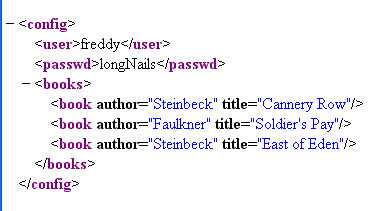
Chilkat Zig Downloads
const std = @import("std");
const chilkat = @import("chilkat");

pub fn main(init: std.process.Init) !void {
    const alloc = init.arena.allocator();

    const xml = try chilkat.Xml.init();
    defer xml.deinit();

    xml.loadXmlFile("qa_data/xml/sample1.xml") catch {
        std.debug.print("{s}\n", .{try xml.getLastErrorText(alloc)});
        return;
    };

    // Navigate to the "books" element:
    xml.findChild2("books") catch {
        std.debug.print("No books child found!\n", .{});
        return;
    };

    const num_children = xml.getNumChildren();

    var i: i32 = 0;
    while (i < num_children) {
        // Navigate to the Nth book
        xml.getChild2(i) catch {};

        // Display the book title:
        std.debug.print("{s}\n", .{try xml.getAttrValue(alloc, "title")});

        // Add a new integer attribute:
        // Should never fail..
        xml.addAttributeInt("bookId", i) catch {};

        // Add a new unread="yes" attribute:
        xml.addAttribute("unread", "yes") catch {};

        // Navigate back up to the parent:
        xml.getParent2() catch {};

        i = i + 1;
    }

    // Navigate back to the document root:
    xml.getRoot2();

    // Save the updated document:
    xml.saveXml("modified.xml") catch {
        std.debug.print("{s}\n", .{try xml.getLastErrorText(alloc)});
        return;
    };

    std.debug.print("{s}\n", .{try xml.getXml(alloc)});
}