CkPython Requires Chilkat v11.7.0+
CkPython
Embed a QR Code in HTML as a Data URI
See more QR Code Examples
Demonstrates putting a QR code directly into an HTML page or HTML email with no separate image file. The base64 PNG returned by QrCode becomes the src of an img tag as a data URI, which is the MIME type from outputs[0].mimeType followed by the base64 from outputs[0].base64.Chilkat CkPython Downloads
import sys
import chilkat
success = False
# This example requires the Chilkat API to have been previously unlocked.
# See Global Unlock Sample for sample code.
json = chilkat.CkJsonObject()
json.UpdateString("payload.text","https://www.chilkatsoft.com/")
json.UpdateInt("render.moduleSize",5)
fmt = chilkat.CkFormats()
jsonOut = chilkat.CkJsonObject()
success = fmt.QrCode("generate",json,jsonOut)
if (success == False):
print(fmt.lastErrorText())
sys.exit()
# A data URI has the form data:<MIME type>;base64,<base64 data>
sbHtml = chilkat.CkStringBuilder()
sbHtml.Append("<html><body><p>Scan to visit chilkatsoft.com</p><img alt=\"QR code\" width=\"")
sbHtml.AppendInt(jsonOut.IntOf("outputs[0].width"))
sbHtml.Append("\" height=\"")
sbHtml.AppendInt(jsonOut.IntOf("outputs[0].height"))
sbHtml.Append("\" src=\"data:")
sbHtml.Append(jsonOut.stringOf("outputs[0].mimeType"))
sbHtml.Append(";base64,")
sbHtml.Append(jsonOut.stringOf("outputs[0].base64"))
sbHtml.Append("\"></body></html>")
success = sbHtml.WriteFile("qa_output/qr_page.html","utf-8",False)
if (success == False):
print(sbHtml.lastErrorText())
sys.exit()
print("image: " + str(jsonOut.IntOf("outputs[0].width")) + " x " + str(jsonOut.IntOf("outputs[0].height")) + " pixels")
print("HTML length: " + str(sbHtml.get_Length()))
# The page, as a browser shows it:
# 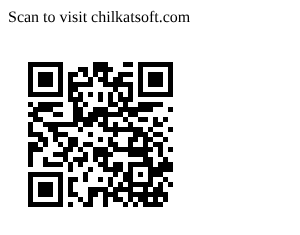 # Sample output:
# image: 185 x 185 pixels
# HTML length: 1211