Java
Java
AddAttribute - Insert New Attribute in an XML Node
Demonstrates adding an name=value attribute to an XML element.
This example uses the XML sample file here: sample1.xml. The sample1.xml file contains this content: 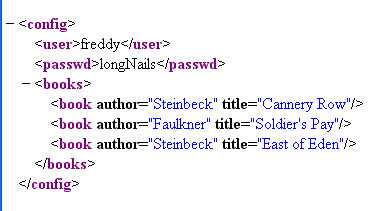
Chilkat Java Downloads
import com.chilkatsoft.*;

public class ChilkatExample {

  static {
    try {
        System.loadLibrary("chilkat");
    } catch (UnsatisfiedLinkError e) {
      System.err.println("Native code library failed to load.\n" + e);
      System.exit(1);
    }
  }

  public static void main(String argv[])
  {
    boolean success = false;

    CkXml xml = new CkXml();

    success = xml.LoadXmlFile("qa_data/xml/sample1.xml");
    if (success != true) {
        System.out.println(xml.lastErrorText());
        return;
        }

    //  Navigate to the "books" element:
    boolean bFound = xml.FindChild2("books");
    if (bFound == false) {
        System.out.println("No books child found!");
        return;
        }

    int numChildren = xml.get_NumChildren();

    int i = 0;
    while (i < numChildren) {

        //  Navigate to the Nth book
        xml.GetChild2(i);

        //  Display the book title:
        System.out.println(xml.getAttrValue("title"));

        //  Add a new integer attribute:
        //  Should never fail..
        xml.AddAttributeInt("bookId",i);

        //  Add a new unread="yes" attribute:
        xml.AddAttribute("unread","yes");

        //  Navigate back up to the parent:
        xml.GetParent2();

        i = i+1;
        }

    //  Navigate back to the document root:
    xml.GetRoot2();

    //  Save the updated document:
    success = xml.SaveXml("modified.xml");
    if (success != true) {
        System.out.println(xml.lastErrorText());
        return;
        }

    System.out.println(xml.getXml());
  }
}